Decking · Cool & damp
How long does a pressure-treated deck last in Seattle, WA?
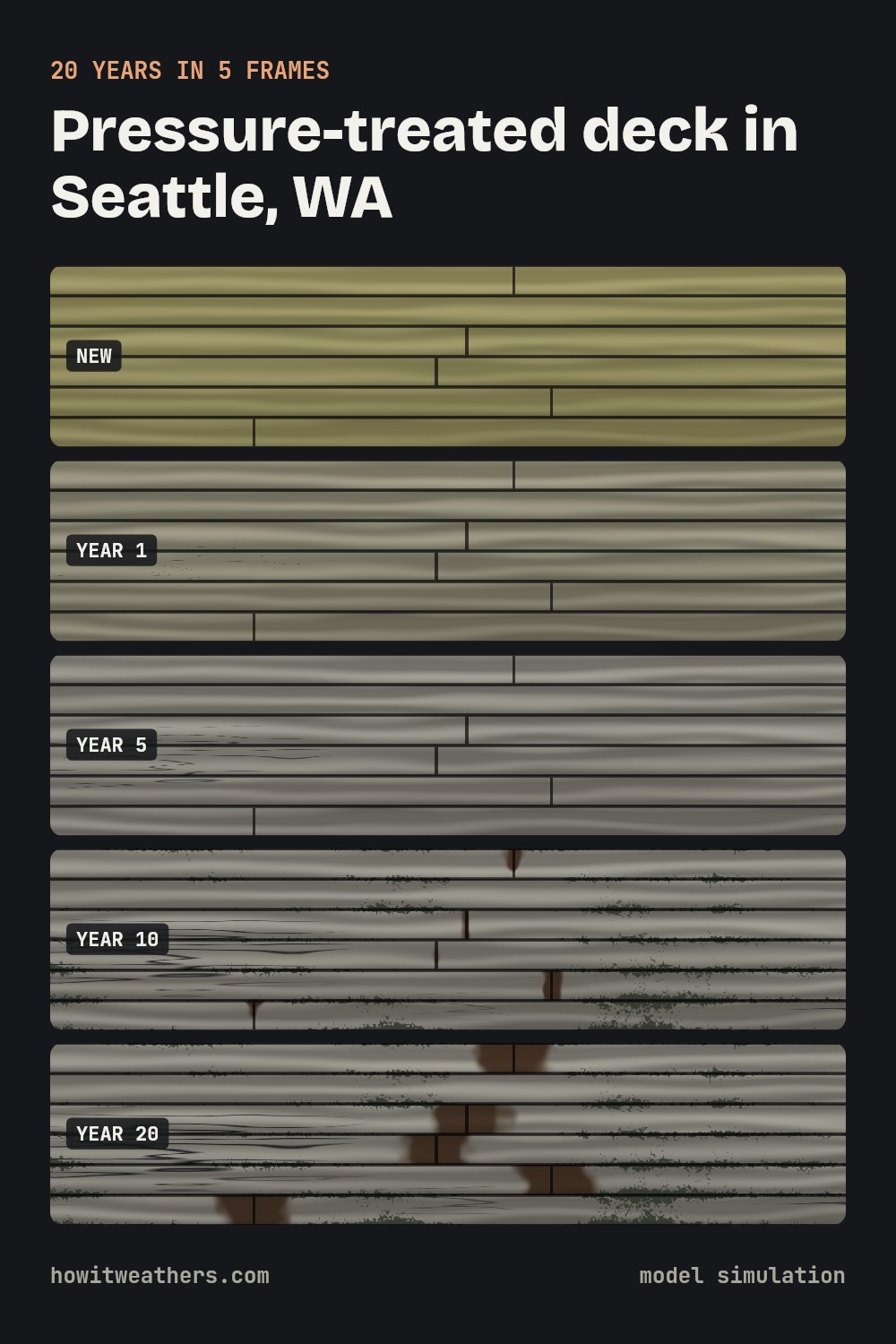
In Seattle, moisture — not sun — is the main enemy of a pressure-treated deck. The city sees about 154 days with rain a year, mostly from October to April, and its Scheffer decay index of 52.6 is moderate (#14 of 25 cities we cover). Unsealed boards gray within two years, then mildew and soft board ends become the real problem. Model estimate: 12–15 years unsealed, 16–21 years sealed on schedule.
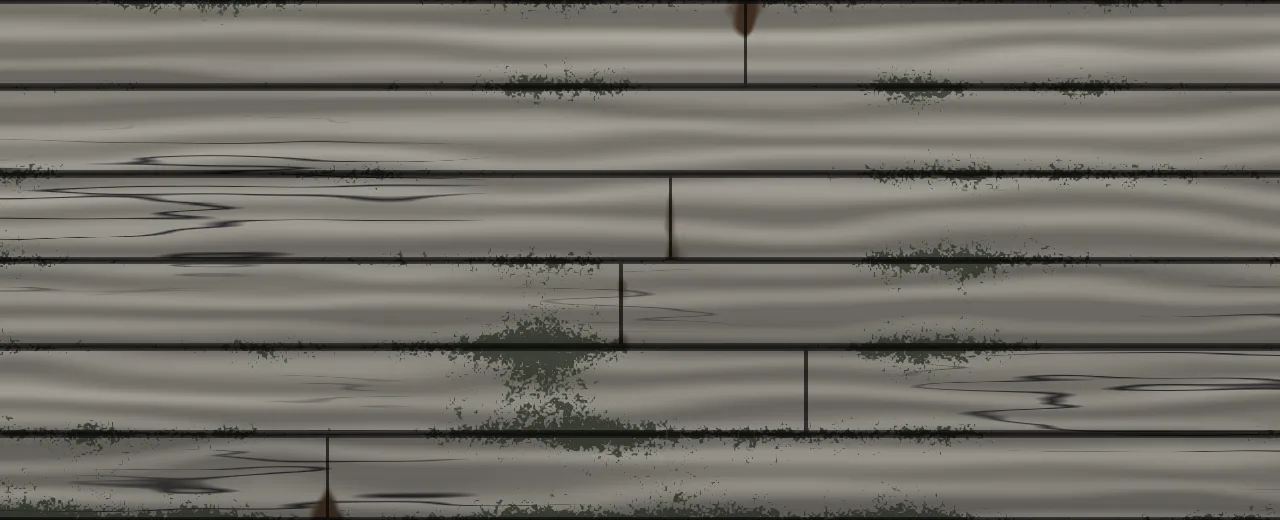
Storyboard
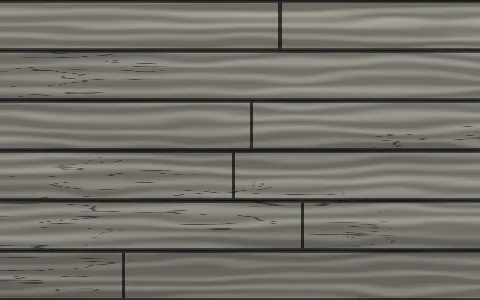
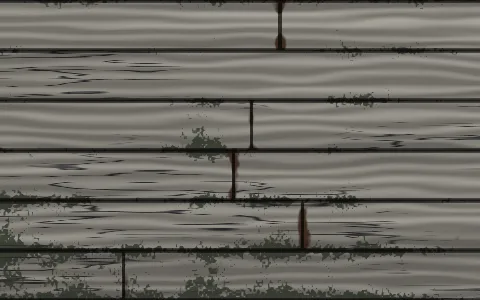
20 years in Seattle, unsealed


Seattle’s wear fingerprint
Each bar is scaled to the highest of the 25 cities we cover; the black line marks the median.
NOAA station SEATTLE BOEING FLD (USW00024234, 7.3 km away), 1991–2020 normals · humidity & UV: NASA POWER.
What fails first here
- 1Mildew & algaeA wet season from October to April and 83% average humidity keep shaded boards damp; dark spots start near walls, planters and gaps.
- 2Checks, splits and warpingMild here: limited UV and only 29 freeze–thaw days a year keep cracks shallow.
- 3Rot at board ends & joistsThe real lifespan limiter in Seattle: decay index 52.6. Treatment protects the wood, but cut ends and drilled holes lose it — brush end-cut preservative on during building.
- 4GrayingCosmetic, and fast: our model has the surface fully silver by year 2. Not damage on its own, but it means the protective surface is gone.
Upkeep
Seattle maintenance calendar
Built from local normals: bar width is the share of days with rain; sealant needs 2–3 dry days between 50 and 88 °F.
Same city, other materials
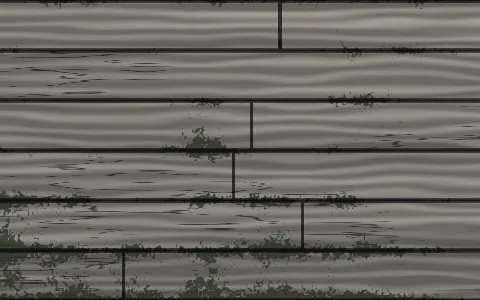
How the alternatives age in Seattle
Pin-ready
Save it for when you build.
The 20-year storyboard as a tall pin, linking back to this page.
Pressure-treated decks in similar climates
 Portland, OR
 New York, NY
 Boston, MA
 Chicago, IL
 Buffalo, NY
…and in very different ones
 Phoenix, AZ
 Las Vegas, NV
 Albuquerque, NM
Questions Seattle owners ask
How long does a pressure-treated deck last in Seattle?
Our model puts it at 12–15 years unsealed and 16–21 years if it is sealed every 2–3 years. The national typical range is 10–15 yrs; Seattle’s moisture and decay profile is why the local number differs.
When is the best time to seal a pressure-treated deck in Seattle?
July and August: the months with the fewest rainy days while average temperatures sit between 50 and 88 °F. Most sealants need 2–3 dry days to cure.
Cedar or pressure-treated: which lasts longer in Seattle?
Our model gives an unsealed pressure-treated deck 12–15 years here and untreated cedar 15–19 years. Where rot is slow, cedar’s stability wins: treated pine checks and warps faster in sun and frost.
Why does wood turn gray or black in Seattle?
Graying is UV plus weathering of the surface; black spots are usually mildew or algae feeding on that grayed layer in damp weather, not rot. A cleaner and a dry-season seal stop it.
Model simulation, not a guarantee: south-facing, full sun, no shade or ground-contact surprises. How it works.